Magnesium is not a fat burner, but it is a core mineral for insulin sensitivity, blood sugar control, and metabolic health, all of which make sustainable fat loss easier.
Low magnesium status is common and is linked in research to higher risk of metabolic syndrome, insulin resistance, and type 2 diabetes, especially in people with modern, ultra-processed diets.
During calorie deficits and GLP-1 therapy, total food volume drops — which can quietly cut micronutrients like magnesium even while protein is on point, raising the value of a micronutrient “safety net.”
Optimizing magnesium helps you preserve muscle while losing fat by supporting insulin sensitivity, protein synthesis, recovery, and sleep, especially when combined with resistance training and adequate protein.
Performance-oriented forms like magnesium malate (used in Building Blocks) and magnesium glycinate are better choices than cheap oxide-heavy products for people focused on metabolic and body-composition changes.
Does Magnesium Actually Help With Weight Loss?
Let’s start with the blunt answer: magnesium will not directly burn fat the way a stimulant makes you feel amped. There’s no “magnesium shred stack.”
What magnesium does do is support the systems that determine how easily your body can lose fat and keep it off:
How responsive your cells are to insulin
How stable your blood sugar is throughout the day
How well you sleep and recover
How much muscle you keep while the scale is moving down
Meta-analyses of randomized trials show that magnesium supplementation can improve fasting glucose, insulin resistance, and blood pressure in people with or at risk for type 2 diabetes and metabolic syndrome. Those markers don’t automatically equal fat loss, but they’re exactly the levers you want in your favor if you care about long-term metabolic health.
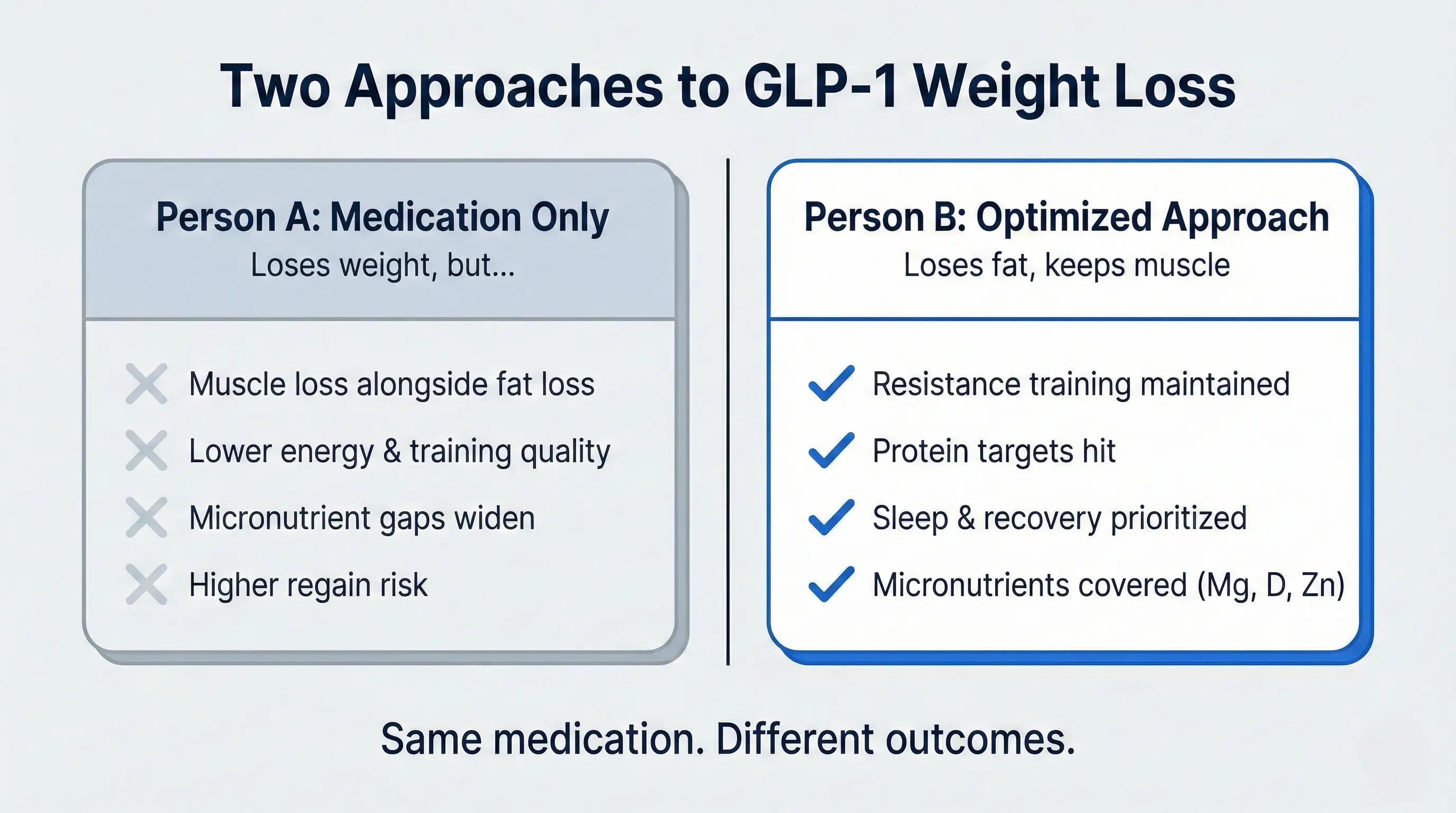
Think of two people on the same GLP-1 medication:
Person A: eats less by default, but doesn’t prioritize protein, micronutrients, sleep, or resistance training.
Person B: uses GLP-1 to create an easier calorie deficit, plus lifts, hits protein targets, sleeps well, and keeps foundational nutrients like magnesium covered.
On paper, they’re both “losing weight.” In reality, Person B is far more likely to lose fat, preserve muscle, and maintain metabolic health, instead of just becoming a smaller, under-muscled version of their old self.
Magnesium is a cofactor for enzymes involved in insulin signaling, including tyrosine kinase activity at the insulin receptor. If magnesium is low:
Insulin receptors don’t work as efficiently
Cells become more insulin-resistant
The pancreas has to pump out more insulin to keep blood sugar in range
Multiple systematic reviews and meta-analyses of randomized controlled trials report that magnesium supplementation can modestly improve HOMA-IR (a measure of insulin resistance) and fasting glucose in people with insulin resistance or type 2 diabetes.
Better insulin sensitivity makes it easier to:
Store carbs as muscle glycogen instead of fat
Maintain lower, more stable insulin levels between meals
Avoid the fatigue–craving–overeat cycle that derails dieting
Magnesium and Blood Sugar Control
Magnesium also plays a role in glucose transport and carbohydrate metabolism. When magnesium status is low, studies show:
Higher risk of impaired fasting glucose and type 2 diabetes
Poorer glycemic control in those who already have diabetes
For people in a calorie deficit or changing macros (e.g., lowering carbs, increasing protein), stable blood sugar helps:
Reduce energy crashes and reactive snacking
Support better training quality
Keep appetite more predictable, even before GLP-1 meds enter the picture
Magnesium and Nutrient Partitioning
“Nutrient partitioning” is where the rubber meets the road for body composition: given the calories you eat, how much ends up as muscle versus fat?
You can’t completely hack this, but improving insulin sensitivity and metabolic health nudges the system so that:
Post-workout carbs are more likely to refill muscle glycogen
Protein is more likely to be used for repair and growth
Less overflow gets pushed into fat storage
Observational and meta-analytic data link higher magnesium intake and status with lower risk of metabolic syndrome, a cluster of central obesity, high blood pressure, dyslipidemia, and insulin resistance.
Magnesium won’t turn you into a genetic outlier, but it helps your body make better use of the calories you do eat—especially when combined with lifting and protein.
Magnesium During Calorie Deficits & GLP-1 Therapy
Why Dieting Increases Magnesium Needs
Any meaningful cut—whether via tracking macros or appetite-suppressing meds, comes with trade-offs:
Less total food volume usually means less micronutrient intake, unless you plan aggressively.
High-protein, lower-carb diets can slightly increase magnesium needs, because magnesium is involved in protein and amino-acid metabolism.
Training hard while dieting adds stress and sweat loss on top, further pulling on magnesium stores.
Surveys of the US diet consistently show that a large fraction of adults already fall short of recommended magnesium intakes even before dieting. When you eat less, you simply have less room for error.
Drive impressive average fat loss in clinical trials
The catch: when your appetite is that suppressed, it’s easy to hit protein but under-shoot micronutrients—especially if your food choices become repetitive or ultra-simple.
That’s where a physician-designed micronutrient base matters. Magnesium is one of several minerals (along with things like zinc and vitamin D) that support:
Magnesium can affect how your body handles water and digestion, but not in the “drop 10 pounds overnight” way you might see on social media:
It’s involved in electrolyte balance (including sodium and potassium handling).
Certain forms (like citrate) can pull water into the gut, softening stools and helping with constipation.
If you’re constipated or chronically bloated, improving magnesium status (especially with the right form) can make you feel lighter and less puffy. But that’s not the same as fat loss—it’s fluid and stool, not actual tissue change.
Preserving Muscle While Losing Fat
Dieting without a strategy is how people end up “smaller but softer.” Maximus’ lens is different: lose fat, keep (or gain) muscle, protect metabolic health.
The Risk: Losing Muscle on Aggressive Diets
Rapid weight loss—whether from extreme dieting or GLP-1s without a plan—can lead to:
Loss of lean mass
Lower resting metabolic rate
Increased fatigue and lower training quality
Higher risk of weight regain once meds or strict diets stop
The goal is to create a calorie deficit while keeping the signals for muscle retention strong: heavy-enough lifting, adequate protein, good sleep, and supportive micronutrients.
Magnesium’s Role in Muscle Preservation
Magnesium supports muscle preservation indirectly but meaningfully:
It participates in protein synthesis and the mTOR pathway that turns training and amino acids into new muscle.
It helps reduce neuromuscular irritability and supports recovery so you can keep lifting hard in a deficit.
It supports better sleep, which in turn supports testosterone, growth hormone, and appetite regulation.
Bottom line: magnesium won’t build muscle on its own, but it helps you keep the muscle you’ve earned while the scale moves downward.
Best Magnesium Forms for Metabolic Health & Weight Loss
“Best magnesium for weight loss” really means “best magnesium for metabolic health, adherence, and side-effect profile while you’re losing weight.”
Magnesium Malate
Magnesium malate combines magnesium with malic acid, a Krebs-cycle intermediate used in ATP production.
Why it’s helpful during weight loss:
Supports energy production when calories are lower
Generally well absorbed and well tolerated
Works nicely as a daytime or pre-training magnesium source
It’s the primary form we use in Building Blocks because it lines up with our performance and metabolic-health goals.
Magnesium Glycinate
Magnesium glycinate pairs magnesium with glycine, an amino acid with calming properties.
During a cut, it’s valuable because:
It’s gentle on the gut
It supports relaxation and sleep, which influence appetite control, emotional eating, and hormone balance
It’s a good candidate for evening dosing in people who feel “tired but wired”
Forms to Be Cautious With
Magnesium oxide: Cheap, high in elemental magnesium, poorly absorbed; mostly acts as a laxative rather than a systemic magnesium source.
High-dose magnesium citrate: Effective for constipation in the short term, but chronic high doses can cause loose stools and may interfere with absorbing other nutrients if overused.
How Much Magnesium Should You Take When Losing Weight?
General Daily Targets
The official RDAs for magnesium are roughly:
Men: 400–420 mg/day
Women: 310–320 mg/day
Those numbers are built for deficiency prevention, not necessarily for high training loads, chronic stress, or GLP-1–driven rapid weight loss.
In practice:
Many active adults land in the 400–500 mg/day total range (food + supplements).
Because food volume often drops on GLP-1s and aggressive cuts, relying solely on diet to hit those intakes can be tough.
The tolerable upper intake level (UL) for supplemental magnesium from non-food sources is set at 350 mg/day for adults, mostly to limit GI side effects. Food-based magnesium doesn’t count toward that limit.
Building Blocks is engineered with this in mind: it provides 200 mg of highly bioavailable magnesium malate as a foundational base, leaving room for additional magnesium from food and, when appropriate, a targeted sleep-oriented magnesium under clinician guidance.
How to Pair Magnesium With Your Routine
A simple structure during weight loss:
Morning / Pre-training:
Take Building Blocks with magnesium malate alongside your first substantial meal.
This supports daytime energy, blood sugar control, and training.
Evening (if needed):
Add a small dose of magnesium glycinate under medical guidance to support sleep and recovery.
General tips:
Taking magnesium with food often improves tolerance.
Split doses (e.g., morning + evening) can reduce GI issues.
Avoid stacking multiple high-dose magnesium products without reviewing your total intake with a clinician—especially if you have kidney disease, take diuretics, or have conditions affecting electrolytes.
Specific dosing and supplement combinations should always be reviewed with a healthcare provider, particularly for people with kidney disease, on diuretics, or living with chronic metabolic or cardiovascular conditions.
Where Magnesium Fits in a Smart Weight Loss Plan
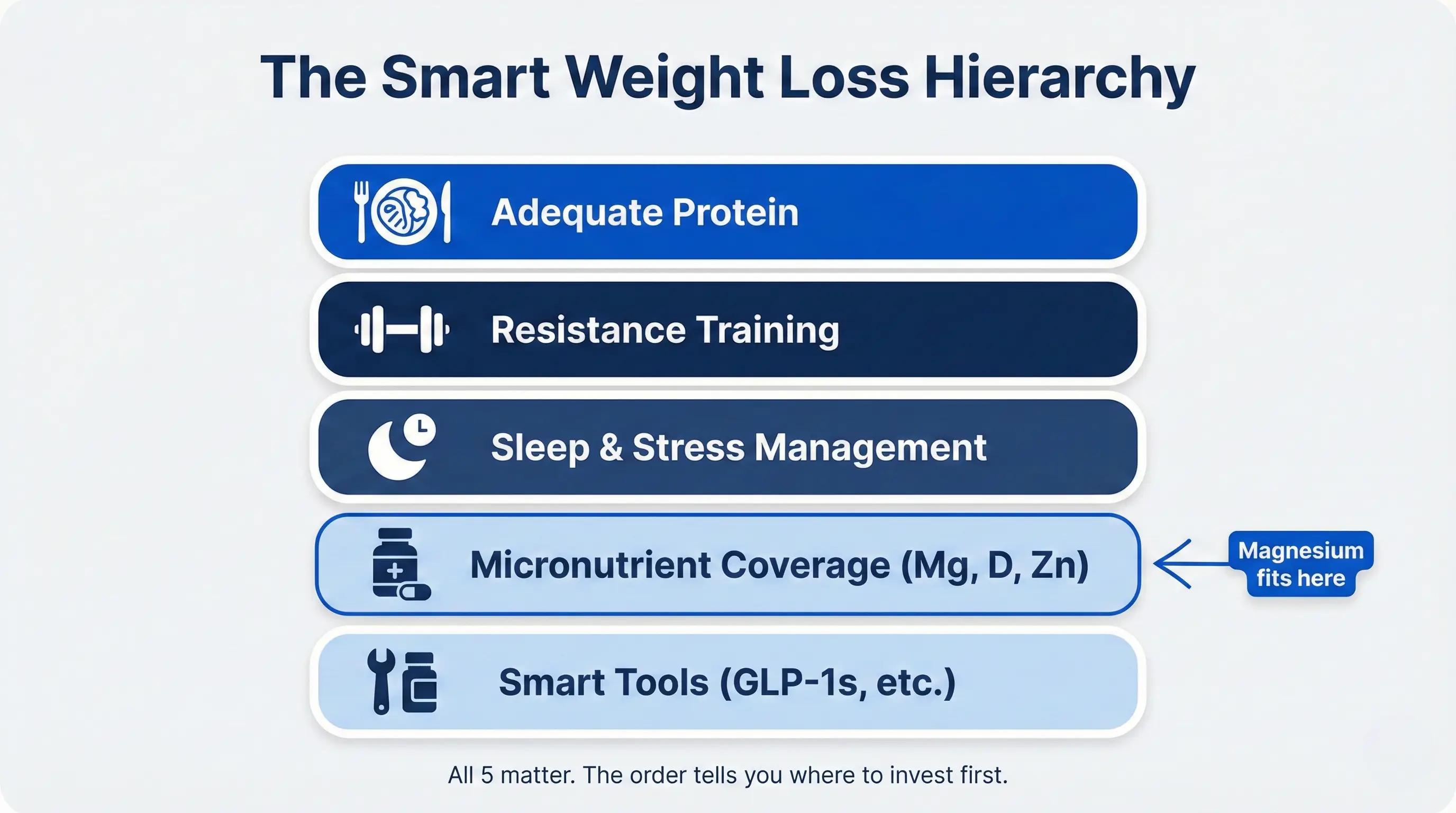
Magnesium is important—but it’s not at the very top of the hierarchy.
A rational order of operations:
Adequate protein to protect muscle
Resistance training a few times per week
Sleep and stress management
Micronutrient coverage, including magnesium, vitamin D, and others
Magnesium fits into step 4 as part of a “no weak links” foundation. It helps your hormones, muscles, and metabolism respond optimally to the work you’re already doing—rather than acting as a magic fat burner.
Building Blocks was formulated as a physician-designed micronutrient base for people on performance and weight loss protocols, including GLP-1s. It uses magnesium malate alongside other vitamins and minerals that support insulin sensitivity, metabolic health, and recovery, so your body has the infrastructure it needs while you change your weight.
FAQs
Does magnesium help you lose weight?
Magnesium doesn’t directly burn fat or act like a stimulant. Instead, it supports insulin sensitivity, blood sugar control, muscle function, and sleep—all of which make it easier to maintain a calorie deficit, avoid rebound cravings, and keep your metabolism healthy during weight loss. It’s a metabolic co-pilot, not the pilot.
What is the best magnesium for weight loss?
The “best” form depends on your bottleneck:
Choose magnesium malate if you care most about energy, training, and metabolic support during the day.
Choose magnesium glycinate if your biggest limiter is sleep or stress.
Both are more useful for metabolic health than relying on poorly absorbed forms like magnesium oxide.
Can magnesium help me lose belly fat specifically?
No supplement can target belly fat specifically. Magnesium can improve whole-body metabolic health and insulin sensitivity, which may make overall fat loss easier, but spot reduction isn’t physiologically realistic. Your body decides where it loses fat based on genetics and hormone patterns, not the location of a supplement’s label claim.