Magnesium: Benefits, Uses, Forms & Performance Optimization
Key Takeaways
Magnesium is required for hundreds of enzymatic reactions involved in energy production, muscle function, sleep, stress regulation, and metabolic health.
Roughly half of adults fall short of recommended magnesium intake, with high-performers at even higher risk due to sweat loss, stress, and modern diets.
The form you take matters: well-absorbed chelates like magnesium malate offer better bioavailability and support ATP production, while cheaper forms like oxide mostly stay in the gut.
Optimizing magnesium can support muscle performance and recovery, sleep quality, metabolic health, and testosterone—especially when combined with structured training and hormone optimization protocols.
Getting the right daily dose, at the right time, in a bioavailable form is more effective than just “adding a magnesium pill” on top of an already stressed system.
Magnesium flies under the radar compared with headline supplements like creatine, vitamin D, or GLP-1 medications—but it quietly powers almost everything you care about: how hard you can train, how well you sleep, how stable your blood sugar is, and how effectively your hormones signal. It’s a cofactor in more than 300 enzymes that regulate ATP production, muscle and nerve function, and blood glucose control—making it one of the true “infrastructure minerals” for performance.
The problem: modern diets, chronic stress, medications, alcohol, and intense training all drain magnesium. Population data suggest that around 48–57% of U.S. adults don’t reach recommended intakes from food alone, and there’s no easy blood test that perfectly captures whole-body magnesium status.
From our perspective, that means “normal” is not enough. If you’re lifting, doing cardio, cutting calories, or running a GLP-1 protocol, your magnesium needs are higher than the bare-minimum RDAs. Form and dosing matter, which is why Building Blocks uses magnesium malate—a highly bioavailable form that directly supports ATP energy production and performance, rather than just checking a “contains magnesium” box.
What Is Magnesium?
Think of magnesium as a master “coordinator” mineral. It:
Activates ATP, the body’s energy currency. Magnesium has to bind to ATP before your cells can actually use it for work, including muscle contraction, brain function, and recovery.
Supports neuromuscular function, helping muscles contract and relax smoothly. Low levels can show up as tightness, twitches, or cramps.
Helps regulate the nervous system, influencing how you respond to stress and how quickly you can shift into a parasympathetic, recovery-focused state.
It is required for protein synthesis, which underlies muscle growth, tissue repair, and adaptation to training.
Contributes to bone health, working alongside vitamin D, calcium, and vitamin K2.
Helps maintain electrolyte balance, including potassium and calcium transport across cell membranes—key for nerve signaling and heart rhythm.
Plays a supporting role in hormone signaling, including insulin, thyroid hormones, and sex hormones.
When magnesium is optimized, energy production feels smoother, muscles recover faster, and your nervous system has more “bandwidth” to handle training, work, and life.
Why Magnesium Deficiency Is So Common
Despite being abundant in leafy greens, nuts, seeds, and whole grains, magnesium deficiency—or at least suboptimal intake—is incredibly common:
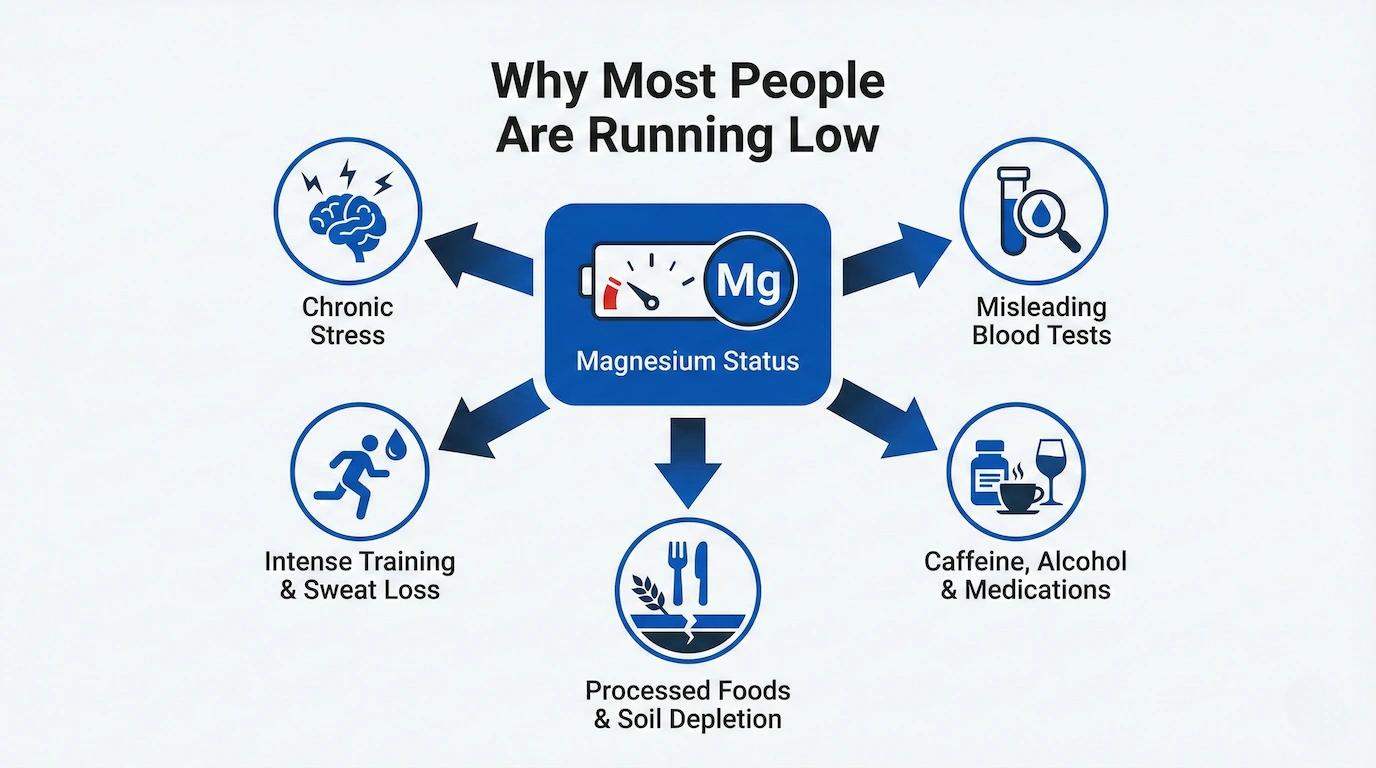
Soil depletion and food processing: Modern agriculture and refined foods strip a significant amount of magnesium from the food supply.
Chronic stress: Stress hormones increase urinary magnesium loss, creating a vicious cycle—more stress, less magnesium, poorer stress tolerance.
High-protein and high-intensity training: Protein synthesis and repeated contractions increase magnesium demand; heavy sweaters lose additional magnesium through sweat.
Alcohol, caffeine, and certain medications (like diuretics and proton pump inhibitors) increase urinary loss or reduce absorption.
“Normal labs” can be misleading: Less than 1% of magnesium is in the blood, and serum levels are tightly regulated. You can have normal serum magnesium while still being functionally low in tissues.
For high-performers, that means it’s easy to be borderline deficient—not sick, but running at 80% of what’s possible.
Key Benefits of Magnesium
Energy Production & ATP Support
Every rep you grind out in the gym, every sprint on the bike, every late-night deep-work session depends on ATP. Magnesium is required at multiple steps of ATP production, from glycolysis to oxidative phosphorylation.
When magnesium is low, people often describe:
Heavy, “tired but wired” fatigue
Poor exercise tolerance
Needing more caffeine to get the same effect
Optimizing magnesium doesn’t feel like a stimulant—it feels like your baseline energy system is finally well-supplied.
Muscle Function, Performance & Recovery
Magnesium is one of the key minerals that keeps muscles contracting and relaxing smoothly:
It helps counterbalance calcium to allow muscle relaxation. Low magnesium can present as cramps, spasms, or a hard time “ever feeling loose.”
It supports mTOR activation and protein synthesis, which are central to muscle growth and repair.
It influences neuromuscular excitability, which can affect strength and coordination.
For lifters, athletes, and anyone in a Maximus testosterone optimization protocol, magnesium is a quiet but critical background variable. If you want a deeper dive into how it interacts with strength and hypertrophy, read more about magnesium for muscle growth & recovery.
Sleep Quality, Relaxation & Stress Regulation
Sleep is where you consolidate gains—hormonally and physically. Magnesium contributes to better sleep and stress resilience by:
Modulating GABA receptors, which help calm neuronal firing.
Supporting cortisol regulation and the stress response.
Helping your nervous system shift into parasympathetic (“rest and digest”) mode at night.
Small randomized trials and meta-analyses in older adults and people with insomnia symptoms suggest magnesium supplementation can modestly reduce sleep onset latency and improve subjective sleep quality, although the evidence is still limited and not universally positive.
We stay realistic here: magnesium is not a knockout drug, but for many people it’s a low-risk lever that makes it easier to unwind and get deeper, more restorative sleep—especially when combined with good sleep hygiene. For a dedicated breakdown, see our guide on magnesium for sleep.
Metabolic Health, Weight Loss & Insulin Sensitivity
Magnesium is a cofactor for enzymes involved in carbohydrate metabolism, insulin signaling, and glucose transport.
Systematic reviews of randomized controlled trials in people with or at risk for type 2 diabetes show that magnesium supplementation can modestly improve fasting glucose, insulin resistance, and other metabolic markers—especially in those who start out deficient.
For people on GLP-1 therapy or aggressive calorie deficits, magnesium matters because it helps:
Support insulin sensitivity and glycemic control
Maintain muscle function and reduce cramping
Offset some of the fatigue that can come with rapid weight loss
We go deeper into how magnesium impacts weight loss & metabolic health, but the bottom line: magnesium won’t melt fat off your body, yet it’s a smart lever for preserving metabolic flexibility and muscle while you’re losing weight.
Hormonal Health & Testosterone Support
Magnesium and testosterone intersect in a few interesting ways:
In vitro work suggests magnesium can influence how testosterone binds to sex hormone–binding globulin (SHBG), potentially supporting higher free (bioavailable) testosterone.
Human studies in active men have found that magnesium supplementation, especially alongside intense training, can increase free and total testosterone compared with controls—likely through a combination of SHBG modulation and improved training capacity.
We stay clear: magnesium is not TRT in a capsule. But if you’re optimizing T naturally or through testosterone therapy, being magnesium-replete supports the overall hormonal environment—especially when combined with adequate vitamin D, zinc, and protein.
Brain Health, Mood & Anxiety
Magnesium interacts with NMDA receptors, GABA transmission, and the stress axis (HPA), all of which influence mood, focus, and stress resilience. Suboptimal status has been linked to higher rates of anxiety and depressive symptoms in observational studies, and some small trials suggest benefit in mood for deficient individuals.
Again, we’re not pitching magnesium as a standalone treatment for anxiety or depression. It’s one biochemical input in a much larger system - but for people already working on sleep, training, therapy, or medication where appropriate, magnesium can be a helpful supportive nutrient. We explore this more fully in our magnesium for anxiety & stress article.
Best Forms of Magnesium (and Why It Matters)
Why Form = Absorption + Effects
All magnesium supplements deliver magnesium ions—but how well you absorb them, and what side effects you experience, depends heavily on what the magnesium is bound to (its “salt” or “chelate”).
Forms that dissolve well in liquid—such as citrate, aspartate, lactate, glycinate, malate, and chloride—tend to have better bioavailability.
Forms like magnesium oxide are cheap and heavily used in low-quality products, but they’re poorly absorbed and more likely to act as laxatives than systemic magnesium repleters.
So “400 mg of magnesium” on a label is not the full story. You care about elemental dose + bioavailability + tolerability.
Overview of Common Types
Short version of the landscape:
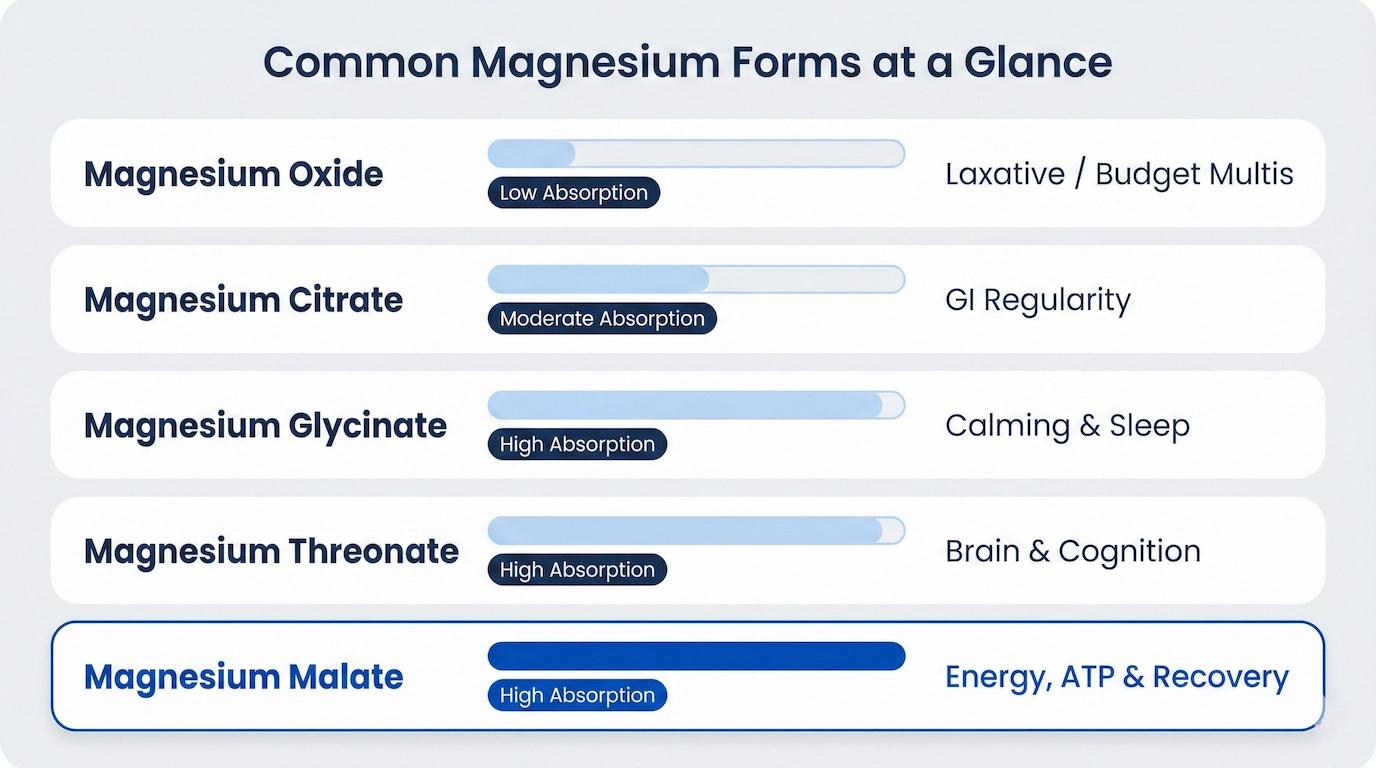
Magnesium oxide – High elemental magnesium, low absorption, commonly used in generic multis and as a laxative.
Magnesium citrate – Often used for constipation at higher doses because it pulls water into the gut.
Magnesium glycinate – Magnesium bound to glycine; generally well-tolerated and popular for calming and sleep-oriented formulations.
Magnesium threonate – Designed for brain penetration; studied for cognition and mood. More specialized and expensive.
Magnesium malate – Magnesium bound to malic acid, a key player in the Krebs cycle (energy production). Well-absorbed, good GI tolerance at effective doses, and particularly interesting for people focused on energy, muscle performance, and recovery.
Magnesium malate is a chelated form—magnesium bound to malic acid—that dissolves well in the gut and is generally absorbed more efficiently than oxide and some inorganic salts. Clinical and mechanistic work suggests that organic salts (like citrate, malate, and glycinate) tend to have higher bioavailability and better GI tolerance at meaningful doses.
For a prescription-strength multivitamin like Building Blocks, that means we can provide a performance-oriented dose without turning the product into a laxative.
Malic Acid = Energy Production Synergy
Malic acid feeds directly into the Krebs cycle, the cellular pathway where you oxidize carbs and fats to produce ATP. Pairing magnesium with malate gives you:
Magnesium to activate ATP and stabilize enzymes
Malate to feed the energy cycle itself
For people who are:
Lifting hard
Doing zone 2 or interval work
Running a GLP-1 protocol and want to protect energy and muscle
…magnesium malate fits the goal: support mitochondrial energy production and recovery, not just meet a lab-defined minimum.
Best Overall Performance Profile
From a Maximus performance-medicine standpoint, magnesium malate offers:
Strong energy and muscle-recovery support
Solid metabolic and insulin-sensitivity support
Broad applicability for both men and women
Excellent synergy with testosterone optimization, GLP-1 weight-loss protocols, and growth-hormone support
That’s why it’s the form we use in Building Blocks and the main internal link destination whenever we mention magnesium malate across our ecosystem.
Magnesium Dosage & How Much You Need
Recommended Intakes (RDA vs Optimal)
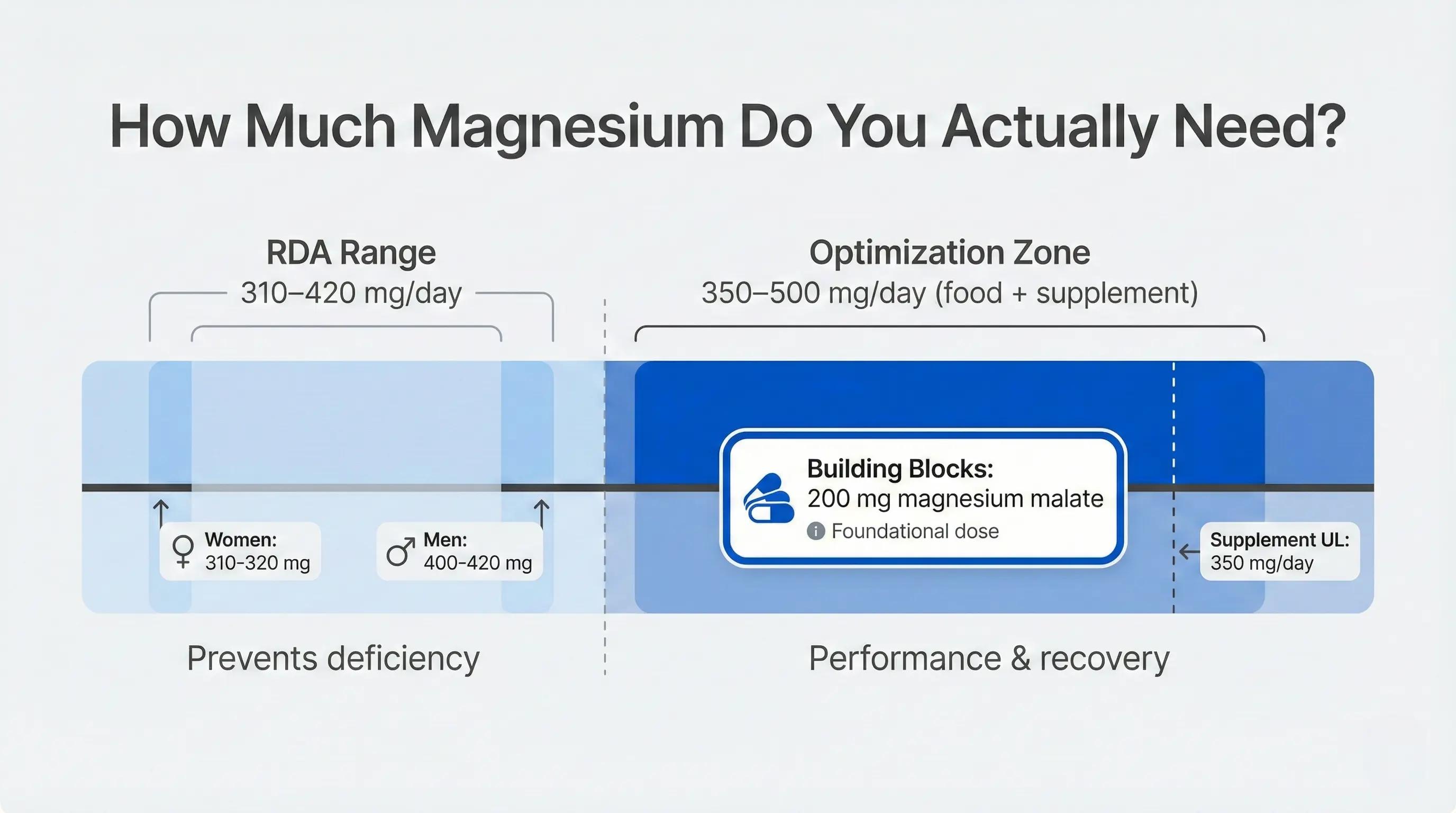
The current RDAs for magnesium in adults are roughly:
These numbers are designed to prevent clear deficiency in most people—not to maximize performance under heavy training, caloric restriction, or chronic stress.
From an optimization lens:
Many high-performers land closer to 350–500 mg/day total from food + supplements, depending on body size, training load, and diet.
Going far beyond that with supplements (especially >350 mg/day from non-food sources) increases the risk of GI side effects and should be supervised by a clinician, especially if you have kidney issues.
Building Blocks provides 200 mg of highly bioavailable magnesium malate, intentionally positioned as a foundational dose to layer on top of a magnesium-containing diet and, when needed, an evening sleep-oriented magnesium like glycinate.
How to Assess Your Magnesium Levels
There’s no single perfect test, but a combination of markers is helpful:
Serum magnesium – Easy to run but often normal even when tissue levels are low.
RBC (red blood cell) magnesium – May better reflect intracellular status, though it’s not perfect.
Clinical signs and symptoms – Muscle cramps, twitching, poor sleep, low energy, elevated blood pressure, or insulin resistance can all be consistent with low magnesium, but they’re non-specific.
For most people, the pragmatic approach is:
Look at your diet and symptoms.
Consider baseline labs (serum ± RBC) with your clinician.
Optimize intake from whole foods + a well-formulated supplement, then reassess how you feel and perform.
When to Take Magnesium
Timing is flexible, but a few principles help:
Evening dosing can support relaxation and sleep, especially if combined with calming forms like glycinate.
Split dosing (e.g., morning + evening) can improve absorption and reduce GI issues for higher total intakes.
With food is often best tolerated, though some people handle magnesium fine on an empty stomach.
In practice, many Maximus clients take Building Blocks in the morning with food (for steady daytime energy and metabolic support), and if needed—use a small evening dose of a sleep-oriented magnesium under clinician guidance.
Note: Maximus Building Blocks provides 200 mg of magnesium malate per day—engineered as a performance-oriented baseline rather than a bare-minimum RDA patch.
Who Magnesium Is Especially Important For
People Under High Stress
Chronic stress increases magnesium loss and raises the bar for how much you need just to stay level. If your days are packed and your nervous system rarely “turns off,” magnesium is one of the first minerals worth checking.
Athletes & Active Individuals
Lifters, runners, combat-sport athletes, and anyone clocking significant weekly training volume all:
Burn through more ATP
Lose more magnesium via sweat
Place heavier demands on neuromuscular control and recovery
If you’re already optimizing protein, creatine, and sleep, magnesium is a logical next lever.
Reduce appetite and sometimes reduce overall food quality/variety
Can contribute to fatigue and cramping in some individuals
Make muscle preservation a top priority
Having sufficient magnesium on board is part of maintaining metabolic health, neuromuscular function, and energy while the scale is moving down.
Men Optimizing Testosterone
For men in a Maximus testosterone protocol—or those trying to optimize naturally—magnesium sits alongside vitamin D, zinc, sleep, and training as a basic infrastructure nutrient. It won’t replace medical therapy where indicated, but low magnesium is a bottleneck you don’t want in the system.
Women in Perimenopause or High-Stress Lifestyles
Women dealing with hormonal shifts, sleep disruption, or high allostatic load often benefit from ensuring adequate magnesium intake, especially alongside vitamin D3, K2, and other micronutrients that support bone, mood, and metabolic health.
Safety, Side Effects & Interactions
Magnesium is generally safe for most healthy adults when taken within recommended ranges, but there are important caveats:
GI side effects like loose stools, nausea, or cramping are common at higher doses—especially with oxide, citrate, or poorly formulated blends.
People with kidney disease or significant renal impairment should not take magnesium supplements without medical supervision, as they may not clear excess magnesium effectively.
Magnesium can interact with certain medications, including some antibiotics (like tetracyclines and fluoroquinolones), bisphosphonates, and diuretics; spacing doses or adjusting regimens may be required.
The tolerable upper intake level (UL) for supplemental magnesium from non-food sources is set at 350 mg/day for adults, primarily to avoid GI effects; higher therapeutic doses should be guided by a clinician.
If you have chronic conditions, are pregnant, or take prescription medications, talk with your healthcare provider before adding or significantly increasing magnesium supplementation.
Why Magnesium Is Foundational for Optimization
Magnesium doesn’t grab headlines, but it underpins almost every system you’re trying to optimize: energy, training adaptation, sleep, stress resilience, metabolic health, and hormonal signaling.
In a world where nearly half of adults don’t hit recommended intake and high-performers burn through more magnesium than average, treating this mineral as optional is leaving performance on the table.
Form and dose matter. Cheaper forms like magnesium oxide are mostly GI agents; performance-oriented forms like magnesium malate actually move the needle on whole-body status while supporting ATP production and recovery.
That’s why Maximus designed Building Blocks with 200 mg of highly bioavailable magnesium malate—as part of a prescription-strength micronutrient base that’s built to ride alongside testosterone optimization, GLP-1 therapy, growth-hormone support, and serious training.
If you’re serious about long-term performance, magnesium isn’t a “nice-to-have.” It’s part of the foundation.
Consider adding Building Blocks to your Maximus protocol to ensure core minerals—magnesium malate included—are dialed in for performance, hormone balance, recovery, and metabolic health.
Magnesium FAQs
What is magnesium good for?
Magnesium supports energy production, muscle contraction and relaxation, nerve function, blood sugar regulation, blood pressure control, and bone health. It also plays a role in sleep quality, stress resilience, and hormone signaling, making it particularly important for people focused on performance and long-term metabolic health.
What type of magnesium is best to take?
There’s no single “best” form—different types are better for different goals:
Glycinate is often preferred for calming and sleep.
Citrate is often used to help with constipation.
Threonate is targeted toward brain and cognitive support.
Malate is a strong option if you care about energy, training, and recovery, which is why Maximus uses it in Building Blocks.
Oxide –
Sucrosom
Cheap magnesium oxide is generally less useful for systemic repletion. For a full comparison, learn more about the different types of magnesium and when to use each.
Can magnesium help with sleep, stress, or anxiety?
Magnesium can support relaxation and sleep quality by modulating GABA and NMDA receptors and helping the nervous system shift into a more parasympathetic state. Trials in older adults and individuals with insomnia symptoms show modest improvements in sleep onset and subjective sleep quality, though the evidence is mixed and not a cure-all.
For stress and anxiety, magnesium is best viewed as one supportive factor, not a standalone treatment. Significant or worsening mood symptoms should always be discussed with a mental-health professional. For deeper detail, see our posts on magnesium for sleep and magnesium for anxiety & stress.
How much magnesium should I take each day?
Most adults need roughly 310–420 mg/day from all sources, depending on sex and age. High-performers, heavy lifters, and people under significant stress often benefit from being at the upper end of that range, combining food sources with a well-formulated supplement.
As a general rule, staying at or below 350 mg/day from supplements (on top of dietary intake) is a safe starting point for healthy adults. Higher doses or therapeutic use should be guided by a clinician, especially if you have kidney issues or take interacting medications.
Can magnesium increase testosterone?
Magnesium isn’t a testosterone drug, but it may support free testosterone in specific contexts. In vitro work suggests magnesium can influence how testosterone binds to SHBG, and small human studies show increases in free and total testosterone when magnesium is combined with intensive exercise—particularly in men who were not already replete.
Think of magnesium as part of the supporting cast for hormonal health—alongside adequate protein, sleep, vitamin D, zinc, and structured training—not as a standalone testosterone solution. For men focused on strength and recovery, we explore this intersection more in our magnesium for muscle growth & recovery article.