






Reviewed for Medical Accuracy by the Maximus Clinical Review Team
GLP-1 for Metabolic Health
Microdosing GLP-1: The low-dose path to metabolic benefits

Take control of your metabolic health with a low-dose, physician-supervised semaglutide or tirzepatide protocol.
Start your protocolTake control of your metabolic health with a low-dose, physician-supervised semaglutide or tirzepatide protocol.
Reviewed for Medical Accuracy by the Maximus Clinical Review Team
GLP-1 for Metabolic Health
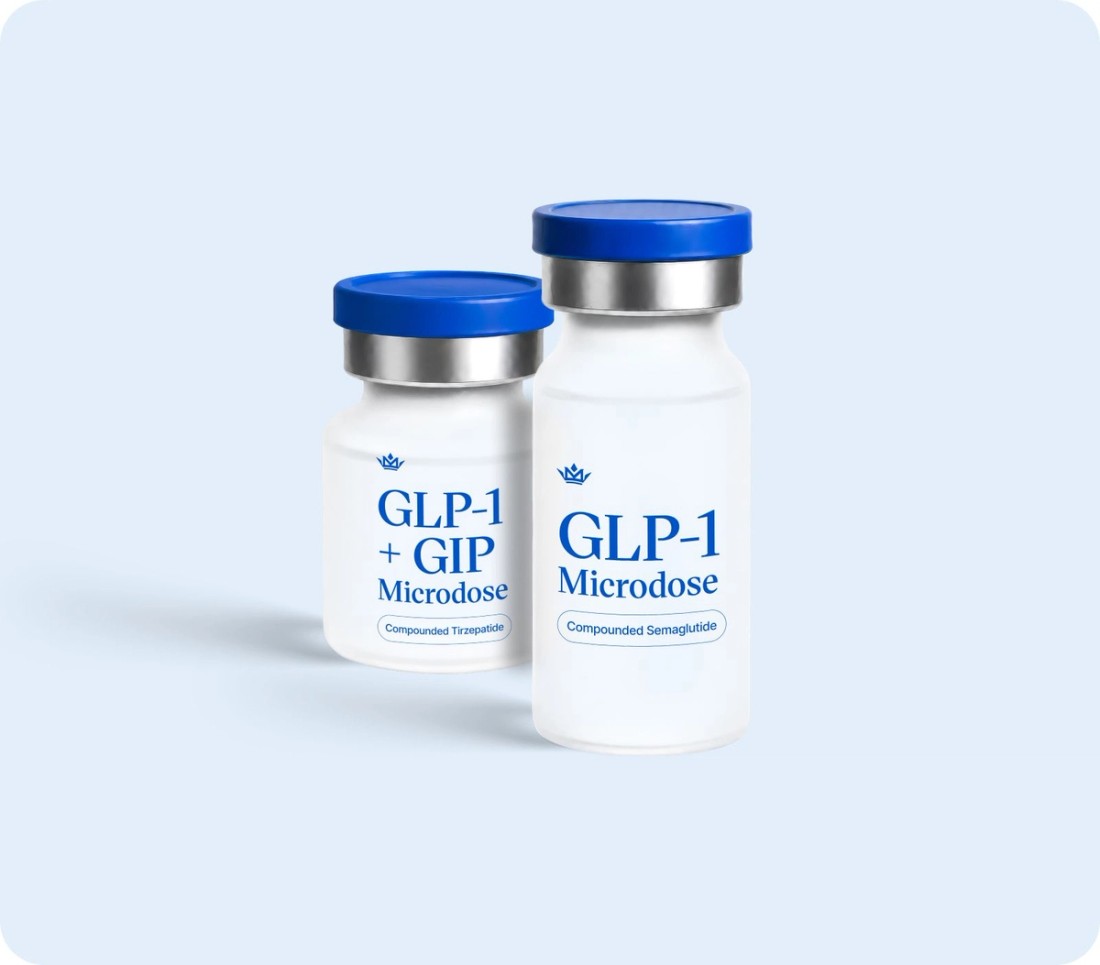
What's different about microdosing
While weight loss programs use GLP-1 at higher doses to suppress appetite, microdosing keeps the dose deliberately low. The target effect is steadiness. Appetite and post-meal blood sugar swings tend to feel steadier through the day. The mechanism: GLP-1 receptor agonism supports glucose-dependent insulin secretion when blood sugar is high,1 and slows how quickly food leaves the stomach.2
- Monitored and adjusted to your response
- Vetted and sourced from licensed US pharmacies
- Physician-supervised medical protocol
- Broadly eligible, without a high bar to clear
- Physician-supervised
- 50k+ clients
- Licensed U.S. pharmacies
Low-dose use of GLP-1 medications for metabolic health is an off-label use. GLP-1 medications are FDA-approved for other uses; your physician determines whether an off-label protocol is appropriate for you.
What's different about microdosing
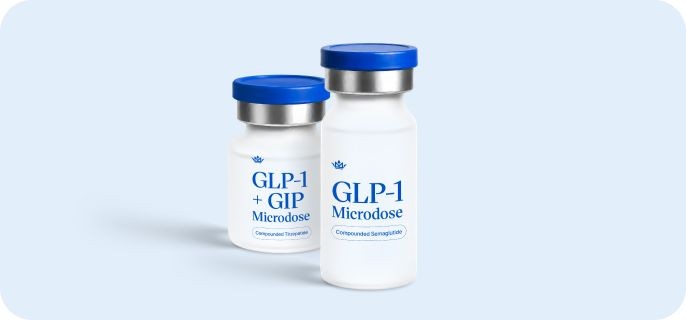
While weight loss programs use GLP-1 at higher doses to suppress appetite, microdosing keeps the dose deliberately low. The target effect is steadiness. Appetite and post-meal blood sugar swings tend to feel steadier through the day. The mechanism: GLP-1 receptor agonism supports glucose-dependent insulin secretion when blood sugar is high,1 and slows how quickly food leaves the stomach.2
Two powerful protocols
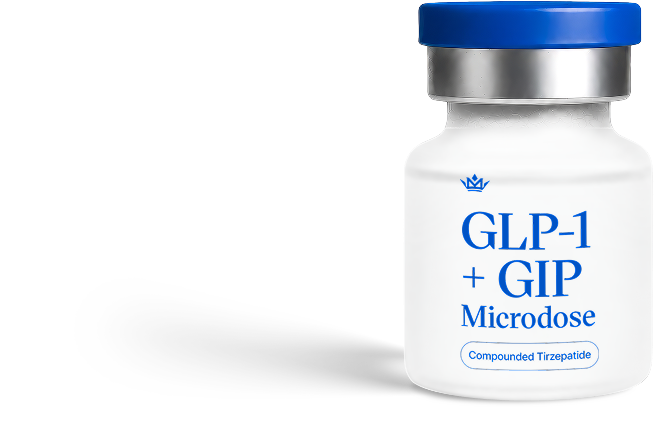
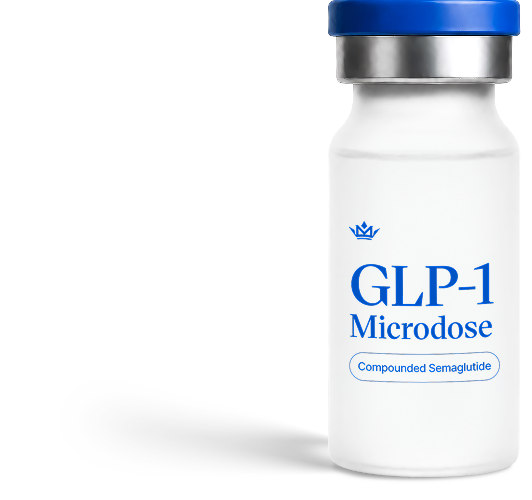
Tirzepatide works on two metabolic pathways (GLP-1 and GIP); semaglutide works on one and costs less. Your physician confirms the right fit at your assessment.
SELECTED — MOST MEMBERS START HERE
Tirzepatide
Dual GLP-1/GIP receptor agonist
Starting dose 1.5mg/week
TAP TO SELECT
Semaglutide
GLP-1 receptor agonist
Starting dose 0.25mg/week
Compounded medications are not FDA-approved for safety, efficacy, or quality. Compounded medications are prepared by licensed 503A/503B pharmacies using pharmaceutical-grade active ingredients. They are not FDA-approved finished drug products. Maximus protocols require a physician prescription.
What the evidence shows, and what it doesn't
Well established
The glucose, insulin, and appetite-signaling mechanisms above are supported by consistent physiology research going back over a decade.
STILL emerging
Some research points to effects on inflammation and cardiometabolic markers like blood pressure and lipids. The strongest data so far comes from full-dose trials in people with obesity or existing heart disease.
For people with aging metabolisms

Metabolism changes with age. Blood sugar creeps up, energy dips after meals, midsection fat holds on. This protocol is for people seeing those signals.

Two steps to qualify. A short intake asks your goal, then shows your customized protocol eligibility..

Some medical histories rule this out: medullary thyroid cancer or MEN 2 (personal or family), past pancreatitis, or pregnancy. Once you enroll, a physician reviews your history.
Your first 45 days
Assessment
Short intake on your goals and health history.
Physician review
A physician reviews your history and goals to build your plan.
Pharmacy fulfillment
Compounded and shipped from a licensed U.S. pharmacy.
Ongoing check-ins
Your clinician checks in at day 45 to make sure your first prescription is going smoothly.
Safety
The most common side effects across GLP-1 medications are digestive, nausea and changes in appetite or digestion, most noticeable when starting or changing a dose.3 Rare but serious risks include pancreatitis and gallbladder problems.
Contraindications and precautions: a personal or family history of medullary thyroid cancer or MEN 2 rules this out. A history of pancreatitis and pregnancy require physician review before starting.
Boxed warning: risk of thyroid C-cell tumors (MTC/MEN2). Read more ↓
Microdosing GLP-1 FAQs
What is GLP-1 microdosing?
It's a physician-supervised, low-dose GLP-1 protocol aimed at supporting metabolic health, glucose regulation, insulin sensitivity, and how you feel day to day, rather than weight loss. Maximus offers low-dose semaglutide (GLP-1 receptor agonist) and low-dose tirzepatide (dual GLP-1/GIP receptor agonist). 'Microdose' is a popular term, not an official clinical category; your physician sets your dose based on your goals and how you respond. This is an off-label use, prescribed at your physician's discretion.
Will I lose weight on this?
This is not a weight-loss protocol. Some members do see modest early changes, but weight loss is not the goal and not something this protocol is dosed to deliver. If your goal is losing weight, or keeping it off after a GLP-1 program, the standard Maximus program is the right fit. We'll route you there.
Does microdosing GLP-1 actually work?
The underlying medication has strong evidence for blood sugar and appetite regulation, mostly in people with diabetes or obesity. For general metabolic optimization in healthy people, the research is still early.
Semaglutide or tirzepatide, which is right for me?
Most members start with tirzepatide. It works on two metabolic pathways (GLP-1 and GIP), where semaglutide works on one, that broader mechanism is why it's usually our recommended starting point. Semaglutide is fully supported and is the lower-cost option if that's the deciding factor.
What are the side effects?
Microdosing uses the same medications as standard GLP-1 programs, so the same class of risks applies regardless of dose. The common side effects are digestive (nausea, and changes in appetite or digestion), usually strongest when you start or change a dose. There are also rare but serious risks, including pancreatitis and gallbladder problems. Your physician reviews your history for these before you start and monitors you throughout.
Is this FDA-approved?
No. GLP-1 medications are FDA-approved for specific uses like type 2 diabetes and chronic weight management. Using them at a low dose for general metabolic health is an off-label use, and compounded medications are not FDA-approved for safety, efficacy, or quality. That's why this runs under physician supervision with individualized dosing.
What if I don't qualify?
Once you enroll, a physician reviews your medical history and current treatments before anything ships. They're checking a short list of specific conditions, not a BMI or weight bar. If that review finds you're not a fit, ineligibility qualifies for a full refund.


Reviewed for Medical Accuracy by the Maximus Clinical Review Team
Join 50,000+ men and women who have trusted and transformed their health with Maximus.
- Easy online doctor visits
- No appointments, message anytime
- US-based medical providers
- Free expedited shipping
- Physician-supervised
- 50k+ clients
- Licensed U.S. pharmacies
Reviewed for Medical Accuracy by the Maximus Clinical Review Team
Boxed warning: risk of thyroid C-cell tumors (MTC/MEN2).
Semaglutide and tirzepatide carry a boxed warning for risk of thyroid C-cell tumors. Do not use with a personal or family history of medullary thyroid carcinoma (MTC) or Multiple Endocrine Neoplasia syndrome type 2 (MEN 2).
Compounded medications are prepared by licensed 503A/503B pharmacies using pharmaceutical-grade active ingredients. They are not FDA-approved finished drug products. Maximus protocols require a physician prescription.
- 1. Drucker DJ, Holst JJ. The expanding incretin universe. Diabetologia. 2023;66(10):1765-1779.
- 2. Drucker DJ. Mechanisms of Action and Therapeutic Application of Glucagon-like Peptide-1. Cell Metabolism. 2018;27(4):740-756.
- 3. Safwan et al., Annals of Saudi Medicine, 2025.
- 4. Galli et al., JACC, 2025.