Vitamin B12 for Hair & Skin Health: Growth, Shedding & more
Key Takeaways
B12 supports healthy hair and skin indirectly — through red blood cell production, oxygen delivery to follicles, and the rapid cell division that hair and skin depend on.
True B12 deficiency can show up as increased shedding, brittle hair, slow regrowth, and pale or inflamed skin — especially in vegans, older adults, and people on certain medications.
If your B12 levels are already normal, more B12 alone won't stop genetic hair loss. But it's still worth optimizing as part of a broader strategy.
Building Blocks uses methylcobalamin to keep B12 from being the limiting factor, while Maximus' hair regrowth protocols target DHT, follicles, and growth cycles directly.
Why People Ask About Vitamin B12 and Hair
You're seeing more hair in the shower drain than you used to. Maybe the part line is wider, the temples are creeping back, or your skin just looks flat and tired despite being reasonably healthy. So you start searching — and "vitamin B12 for hair" shows up everywhere.
Here's the thing worth understanding upfront: hair is one of the fastest-growing tissues in your body. That makes it one of the first places to reflect a nutritional gap. When your body is short on a key nutrient, it triages — sending resources to vital organs first and deprioritizing "luxury" functions like thick hair and glowing skin. B12 is one of those key nutrients.
But B12 is one piece of a much larger puzzle. Genetics, hormones (particularly DHT), stress, sleep, iron, thyroid function, and other micronutrients all influence hair quality and retention. What we can say clearly is this: if B12 is low, it will absolutely show up in your hair and skin. And fixing it is one of the more straightforward wins available.
How Vitamin B12 Supports Hair Growth and Skin Health
Blood flow, oxygen, and hair follicles
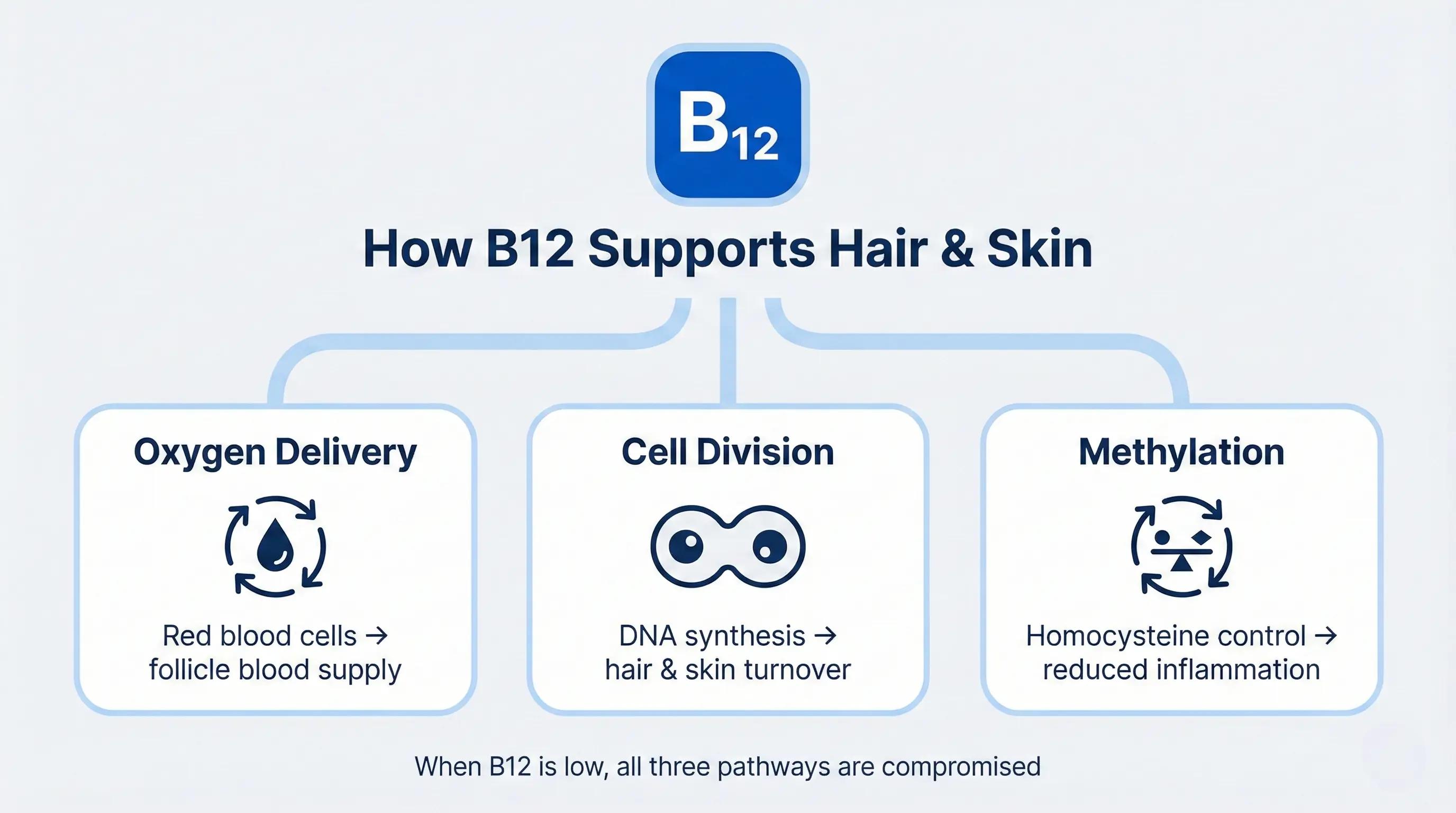
Hair follicles are metabolically active and oxygen-hungry. Every follicle depends on a network of capillaries to deliver the oxygen and nutrients that fuel the growth cycle. B12 is essential for producing healthy, functional red blood cells — the vehicles that carry that oxygen. When B12 is low, red blood cells become oversized and inefficient (megaloblastic anemia), and oxygen delivery to follicles drops. The result is a slower growth cycle, weaker hair shafts, and follicles that enter the resting phase earlier than they should.
Your skin tells a similar story. Reduced oxygenation shows up as paleness, a sallow or washed-out complexion, and slower wound healing. The mechanism is the same: less oxygen reaching the tissue means less fuel for repair and renewal.
DNA, cell turnover, and keratin production
Hair growth requires rapid, continuous cell division at the follicle base. Skin turnover depends on the same process. B12 is a required cofactor for DNA synthesis — without enough of it, cells can't replicate efficiently. That translates directly to thinner hair shafts, slower growth rates, and skin that takes longer to heal and renew.
This is also why B12 deficiency sometimes mimics premature aging in the skin. The dullness, dryness, and slow recovery aren't about getting older — they're about the machinery of cell turnover not having the raw materials it needs.
Methylation, inflammation, and skin appearance
B12 drives the methylation cycle, which among other functions helps regulate homocysteine — an amino acid linked to inflammation and vascular stress when it accumulates. Elevated homocysteine has been associated with skin changes including hyperpigmentation, and some research connects poor methylation status to inflammatory skin conditions.
This doesn't mean B12 is a treatment for acne or eczema. But it does mean that foundational nutrition — methylation running smoothly, homocysteine in check, inflammation managed — creates the conditions under which your skin looks and functions its best. For a deeper look at how B12 and methylation work, see our full vitamin B12 benefits guide.
Signs Your Hair or Skin Might Be Flagging a B12 Problem
B12 deficiency doesn't always start with dramatic hair loss. It often builds slowly, and the cosmetic signs tend to show up alongside subtler systemic symptoms that are easy to dismiss.
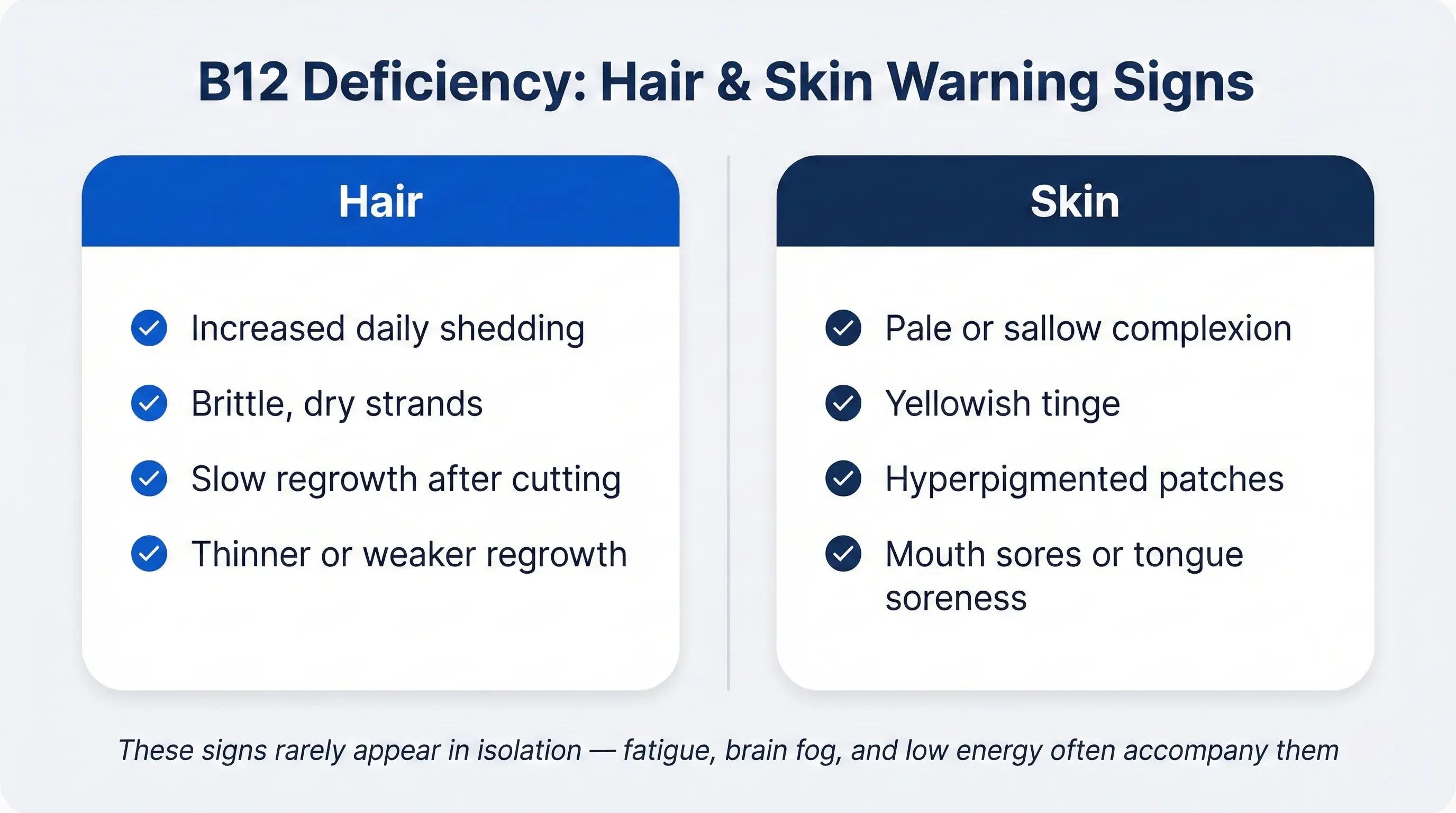
On the hair side, you might notice increased daily shedding — not the typical 50–100 hairs everyone loses, but noticeably more. Hair may become brittle, dry, or slow to grow back after cutting. Regrowth after shedding phases may feel thinner or weaker than before. On the skin side, pallor, a yellowish tinge, dryness, hyperpigmented patches (particularly on the hands or face), and mouth or tongue soreness are classic signs.
These cosmetic changes rarely show up in isolation. If B12 is the driver, you'll usually also feel fatigued, mentally foggy, or low in energy — the systemic symptoms we cover in depth in our B12 for energy guide.
The groups most likely to develop B12-related hair and skin changes are the same ones at risk for deficiency generally: vegans and vegetarians, adults over 50, people on long-term metformin or proton pump inhibitors, anyone who's had bariatric surgery, and people on GLP-1 protocols whose reduced appetite has significantly lowered their overall nutrient intake for an extended period.
If your hair loss is sudden, patchy, or accompanied by systemic symptoms like numbness, balance problems, or significant mood changes, seek medical evaluation. Hair changes can reflect many things — B12 is worth checking, but it's not the only possibility.
Can Low B12 Cause Hair Loss? What the Evidence Shows
This is the question most people want answered directly: does B12 deficiency cause hair loss, and will fixing it help?
The clinical picture is clear on the deficiency side. When B12 is genuinely low, hair changes are well documented — increased shedding, slower growth, reduced hair quality. Case reports and clinical observations consistently show improvement in hair thickness, growth rate, and shedding patterns after B12 deficiency is identified and corrected. The mechanism makes biological sense: you're restoring the oxygen delivery, cell division, and methylation capacity that healthy hair requires.
Where the evidence gets more modest is in non-deficient populations. If your B12 levels are already in the normal range, taking extra B12 on its own is unlikely to produce visible hair changes. There's no strong clinical data showing that supraphysiological B12 doses drive hair growth in people who aren't deficient.
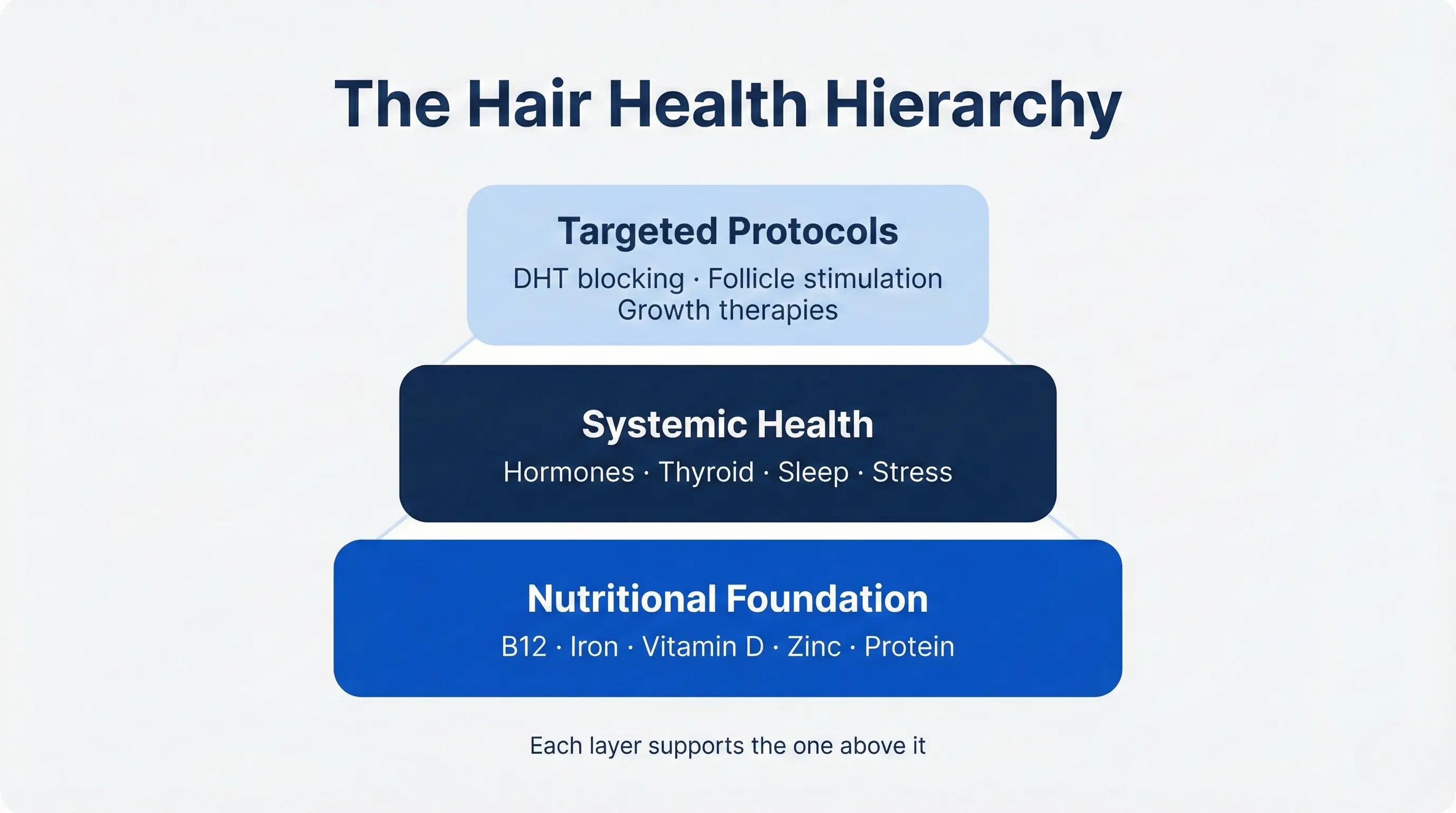
The balanced conclusion: B12 is necessary for healthy hair, but it's not sufficient to fix all hair loss. Genetic androgenetic alopecia (male pattern baldness), driven primarily by DHT sensitivity at the follicle, won't respond to B12 alone — that requires targeted intervention like Maximus' hair regrowth protocols, which address DHT blocking and follicle stimulation directly. But if B12 is low, correcting it before or alongside those treatments removes a bottleneck that could be undermining their effectiveness.
Vitamin B12, Skin Changes, and Overall Appearance
Skin deserves its own attention here because the changes from B12 deficiency are real but often attributed to other causes.
The most common skin manifestations include a pale, washed-out complexion from anemia, dryness and cracking (particularly at the corners of the mouth), hyperpigmented patches on the hands or face, and glossitis — a swollen, smooth, unusually red tongue. These aren't subtle once you know what to look for, but they develop gradually enough that many people adapt without connecting them to a nutrient gap.
Correcting B12 deficiency typically improves skin tone and color as red blood cell production normalizes and oxygenation improves. Cell turnover rate picks up, which can help with healing time and the gradual fading of post-inflammatory marks. Mouth sores and glossitis usually resolve within weeks of adequate repletion.
To be clear: B12 isn't a direct treatment for wrinkles, acne, or photoaging. But when foundational nutrition is solid — adequate B12, proper oxygenation, smooth methylation — your skin has the raw materials it needs to function and repair at its best. That's the difference between actively undermining your appearance from the inside and giving your body what it needs to maintain it.
How to Use B12 Strategically for Hair and Skin
Testing and targets
If you're noticing hair changes and you fall into any of the risk groups above, get your B12 tested before guessing. A serum B12 level is the starting point; your provider may also check methylmalonic acid (MMA) or homocysteine for a more complete picture. "Normal" on a lab report doesn't always mean optimal — borderline levels can still be symptomatic, especially when hair and skin quality are your metric.
Best vitamin B12 form for hair and skin
For long-term daily use, methylcobalamin is the preferred form. It's already in the active state your body uses for methylation and DNA synthesis — no extra conversion required. Cyanocobalamin works and is cheaper, but for ongoing optimization as part of a broader supplement strategy, methylcobalamin is the more direct choice.
Daily consistency beats megadoses
Hair operates on long cycles. The growth phase (anagen) lasts years, and changes in nutrient status take months to visibly manifest in hair quality and density. A one-time B12 megadose or occasional energy shot won't meaningfully change your hair trajectory. What matters is consistent daily sufficiency over time — keeping your B12 in the optimal range month after month so follicles always have what they need.
Where Maximus fits
Building Blocks supplies methylcobalamin alongside other hair-relevant nutrients — biotin, other B-vitamins, zinc, and minerals — as part of a comprehensive daily foundation. It's designed to ensure the micronutrient layer is covered while Maximus' hair regrowth protocols go after the hormonal and follicular drivers directly.
If we're treating your hair with prescription protocols but your B12 is low, we're working with one hand tied behind our back. The foundation has to be in place for the targeted interventions to do their best work.
Other Hair and Skin Factors You Shouldn't Ignore
B12 is one of the fundamentals — but it's not the only one. Before assuming an exotic cause for hair thinning or skin changes, make sure the basics are in order.
Iron and ferritin are critical for hair — low iron is one of the most common nutritional drivers of shedding, especially in women and people on restrictive diets. Vitamin D status matters for follicle cycling and skin health (we'll cover this in depth in our upcoming D3 + K2 guide). Zinc supports keratin structure and immune regulation at the scalp. Protein intake — often overlooked — provides the literal building material for hair and skin tissue.
Beyond nutrition, hormonal factors carry significant weight. Testosterone-to-DHT conversion is the primary driver of male pattern hair loss. Thyroid dysfunction (both hypo- and hyperthyroidism) can cause diffuse thinning. Chronic stress elevates cortisol, which disrupts the hair growth cycle and accelerates shedding — something worth addressing through sleep, stress management, and potentially Maximus' oxytocin calming cream if stress is a persistent factor.
The point isn't to create anxiety about every variable. It's to recognize that hair and skin quality emerge from a system — and B12 is one important input in that system that's relatively easy to check, correct, and maintain.
Where B12 Fits in Your Hair and Skin Strategy
B12 deficiency is a sneaky, correctable cause of hair shedding, slow growth, brittle strands, and dull skin. If you're in a risk group or noticing changes, checking your levels is one of the easiest and highest-return moves available.
But let's be clear about what B12 won't do: it won't override genetics, reverse male pattern baldness, or turn back the clock on aging skin. The value is in making sure a preventable deficiency isn't quietly sabotaging the results you're working toward with everything else — training, nutrition, and targeted protocols like hair regrowth therapy. Building Blocks handles the B12 foundation. Dedicated protocols handle the rest. They work better together than either does alone.
Vitamin B12 for Hair & Skin — FAQs
How long does it take to see hair changes after fixing B12?
Hair operates on long growth cycles, so visible improvements take time. Most people begin noticing reduced shedding within two to three months of correcting a deficiency. Improvements in hair thickness, texture, and growth rate typically become more apparent at the four-to-six month mark and continue to improve over the following months. Skin changes — particularly color, tone, and healing — tend to respond faster, often within weeks of restoring adequate B12 levels.
Can B12 cause acne or skin breakouts?
There are rare case reports linking high-dose B12 supplementation to acne flares, possibly through effects on skin bacteria that produce inflammatory compounds. For the vast majority of people taking B12 at standard supplemental doses, this isn't a concern. If you notice a significant increase in breakouts after starting a new supplement, bring it up with your provider — but don't let a rare association deter you from correcting a genuine deficiency.
Should I take B12 alone or in a multivitamin for hair?
For hair and skin health specifically, a comprehensive approach works better than isolated B12. Hair quality depends on multiple nutrients working together — B12, iron, biotin, zinc, vitamin D, folate, and adequate protein. A well-formulated multivitamin like Building Blocks delivers these together in active, bioavailable forms. Standalone B12 makes sense mainly when you're treating a confirmed deficiency under provider guidance and need a higher repletion dose.
Is hair loss from low B12 reversible?
In most cases, yes — if it's caught and corrected. Hair shedding driven by B12 deficiency is typically a form of telogen effluvium (stress-related shedding) and responds well to repletion. Follicles aren't permanently damaged; they're temporarily starved of the resources they need. However, if B12 deficiency coexists with androgenetic alopecia (genetic pattern loss), fixing B12 will improve hair quality and reduce excess shedding but won't fully reverse the pattern-driven thinning. That's where targeted hair regrowth treatments come in.