By Starling Krentz, MS
You've tried everything. Blue light blockers. Melatonin. That expensive supplement your biohacker friend swears by. Maybe even prescription sleep meds that leave you groggy the next morning.
Yet here you are at 2 AM, scrolling through your phone, wondering why nothing works.
The problem isn't that you're sleeping wrong. Most sleep advice targets the wrong mechanisms. The gap between what people think works and what the science shows is massive.
Let's fix that.
What Is Good Sleep, Actually?
Good sleep isn't just about hours in bed. It's about cycling through the right stages at the right times.
Sleep happens in cycles lasting roughly 90 minutes, repeating 4-6 times per night. Each cycle includes light sleep (stages N1 and N2), deep sleep (stage N3), and REM sleep.
Deep sleep (N3) is when your body does physical repair. Growth hormone releases, tissues rebuild, and your immune system strengthens. This is the restorative sleep that determines how you feel physically the next day.
REM sleep is when your brain consolidates memories, processes emotions, and clears metabolic waste. This is what keeps you sharp mentally and emotionally stable.
You need both. Quality sleep means spending enough time in deep sleep early in the night and enough time in REM sleep in the later cycles. Anything that disrupts this architecture (alcohol, most sleep medications, chronic stress) leaves you feeling unrested even after 8 hours in bed.
Sleep Hygiene Should Be Your First Line of Defense
Before you reach for pills or supplements, get the basics right. These habits create the foundation for quality sleep.
Morning sunlight exposure
Get 10-15 minutes of bright light within an hour of waking. This anchors your circadian rhythm and helps you produce melatonin at the right time later. If you live somewhere with limited sunlight, a 10,000 lux light box for 20-30 minutes works.
Strategic caffeine timing
Cut off caffeine 8-10 hours before bed, not just "after lunch." Caffeine has a half-life of 5-6 hours. If you drink coffee at 2 PM, a quarter of that caffeine is still blocking adenosine receptors at 2 AM.
Temperature manipulation
Your core body temperature needs to drop by 2-3 degrees to initiate sleep. Take a hot shower 60-90 minutes before bed. When you get out, your body rapidly dissipates the heat through vasodilation, which actually lowers your core temperature below baseline. This rebound cooling effect makes sleep onset easier. Keep your bedroom between 65-68°F.
Wind down time
Your nervous system needs time to shift from sympathetic to parasympathetic. Spend 30-60 minutes before bed doing something genuinely relaxing. Reading, light stretching, or conversation with a partner. Not work emails or doomscrolling.
Consistent wake time
This matters more than consistent bedtime. Wake up at the same time every day, even weekends. This regulates your circadian rhythm more effectively than trying to force yourself to sleep at a specific time.
Common Sleep Supplements (And What They Actually Do)
When sleep hygiene isn't enough, many people turn to supplements. Here's what the popular ones can offer.
Melatonin
Melatonin is excellent for regulating your circadian rhythm and signaling to your body that it's nighttime. It works well for jet lag, shift work, or resetting your sleep schedule. While it's not a sedative, it can help you fall asleep 7-12 minutes faster on average.¹ Best used at low doses (0.3-1mg) about an hour before your target bedtime.
Magnesium
Magnesium plays a role in GABA signaling and muscle relaxation. GABA is the neurotransmitter that quiets the brain; it reduces neural activity so your system can shift into a state where sleep becomes possible. Many people find magnesium glycinate or threonate calming before bed. It may be particularly helpful if you have muscle tension or difficulty relaxing physically.
If you're deficient, the right magnesium supplement for sleep can make a noticeable difference.
Valerian root
Valerian has been used for centuries as a natural sedative. While research shows mixed results,² some people respond well to it. It may work by increasing GABA activity in the brain. The downside is the strong smell, but if it helps you sleep, it's worth considering.
Chamomile
Chamomile tea is a gentle, relaxing part of many bedtime routines. It contains apigenin, an antioxidant that binds to receptors in the brain that may promote sleepiness and reduce anxiety. While effects are mild, the ritual itself can signal your body that it's time to wind down.
Ashwagandha
Ashwagandha is an adaptogen that helps your body manage stress. Some studies show it can improve sleep quality and reduce the time it takes to fall asleep, particularly for people dealing with stress and anxiety. It may work best when taken consistently over time rather than as a quick fix.
Glycine
Glycine is an amino acid that may improve sleep quality by lowering core body temperature and promoting calming neurotransmitter activity. Some studies suggest it can help people fall asleep faster and feel more rested the next day. Typical doses are 3g before bed..
What Actually Controls Sleep (And Why Most Interventions Miss the Point)
Sleep isn't controlled by a single switch. It's a careful balance between being awake and alert versus calm and ready for rest. Your body manages this through multiple interconnected systems.
The key players include:
Adenosine accumulation builds sleep pressure throughout the day. This is what makes you actually feel tired. Caffeine works by blocking adenosine receptors.
GABAergic signaling reduces neural excitability and creates the quiet brain state needed for sleep onset. This is what benzodiazepines target, but they do it crudely.
Cortisol regulation controls your stress response. High evening cortisol keeps you wired and is one of the strongest predictors of insomnia.
Parasympathetic activation shifts your nervous system from "fight or flight" to "rest and digest." This is the state where sleep becomes possible.
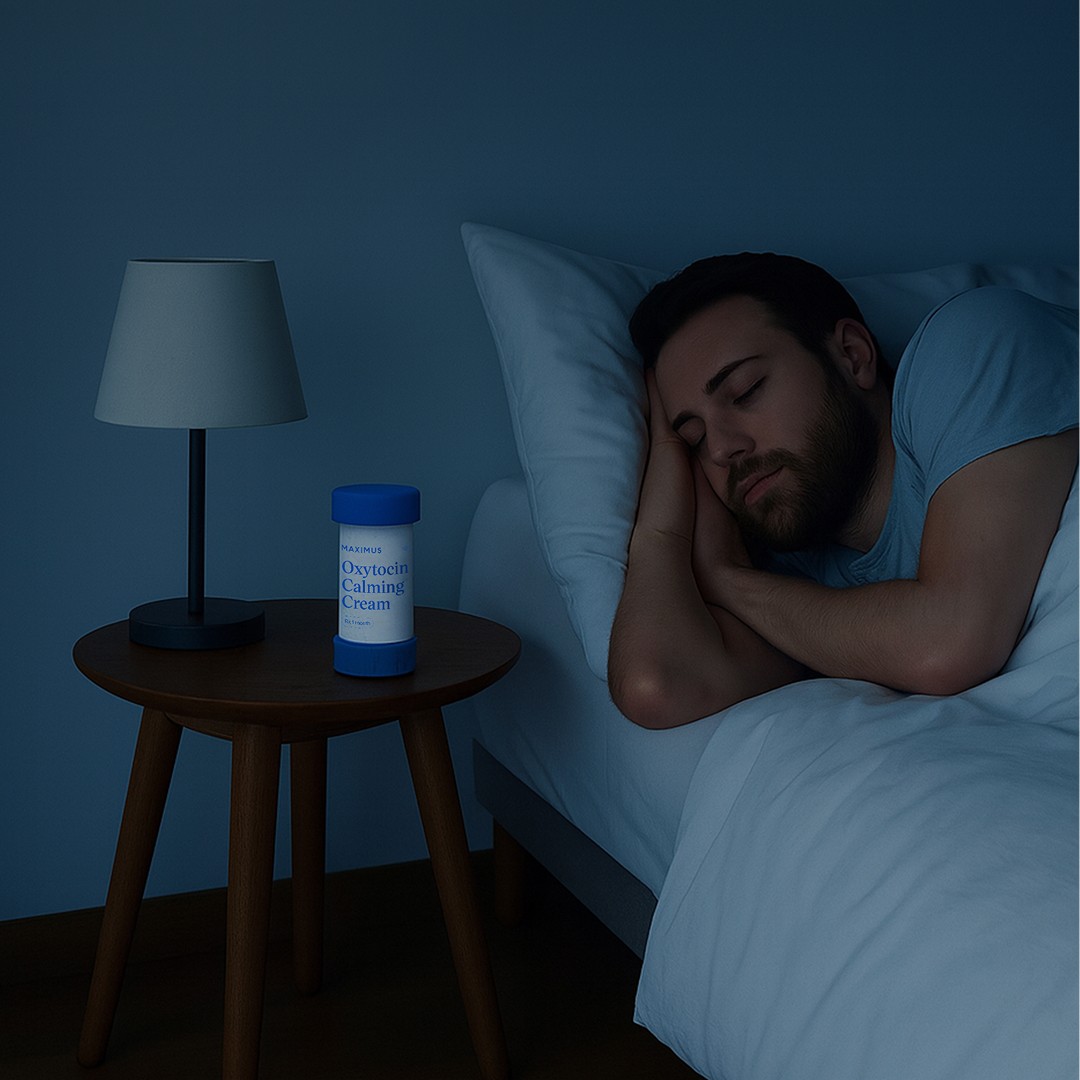
Oxytocin plays a role in reducing stress and promoting parasympathetic activation. Studies show it reduces amygdala reactivity (the brain region responsible for anxiety) and boosts activity in calming brain circuits.³ Animal studies also show that central oxytocin administration promotes both REM and non-REM sleep.⁴ This is why we developed a topical oxytocin cream that supports natural stress reduction and parasympathetic activation, addressing root causes of poor sleep rather than just forcing sedation.
The body is complex. These systems interact in ways we're still figuring out. But the key insight is this: quality sleep requires reducing arousal and stress, not just forcing sedation.
The Bottom Line
If you're serious about improving sleep, here's what actually works:
The non-negotiables:
- Get morning sunlight within an hour of waking
- Cut caffeine 8-10 hours before bed
- Take a hot shower 60-90 minutes before bed (the cooling rebound after helps)
- Keep your bedroom between 65-68°F
- Spend 30-60 minutes winding down before bed doing something actually relaxing
- Wake up at the same time every day
What to stop doing:
- Stop wasting money on high-dose melatonin
- Stop buying supplements you don't need
- Stop falling for proprietary herbal blends with no clinical evidence
Better sleep isn't about trying harder. It's about understanding your biology and giving it what it actually needs.
Interested our latest breakthrough in sleep support? Learn more about Oxytocin Calming Cream here.
References
- Ferracioli-Oda E, et al. Meta-analysis: melatonin for the treatment of primary sleep disorders. PLoS One. 2013;8(5):e63773.
- Fernández-San-Martín MI, et al. Effectiveness of Valerian on insomnia: a meta-analysis of randomized placebo-controlled trials. Sleep Med. 2010;11(6):505-511.
- Huedo-Medina TB, et al. Effectiveness of non-benzodiazepine hypnotics in treatment of adult insomnia: meta-analysis of data submitted to the Food and Drug Administration. BMJ. 2012;345:e8343.
- Kirsch P, et al. Oxytocin modulates neural circuitry for social cognition and fear in humans. J Neurosci. 2005;25(49):11489-11493.
- Lancel M, et al. Intracerebral oxytocin modulates sleep-wake behaviour in male rats. Regul Pept. 2003;114(2-3):145-152.
----
Disclaimer: The contents of this article, including, but not limited to, text, graphics, images, and other information, is for information purposes only and does not constitute medical advice. The information contained herein is not a substitute for and should never be relied upon for professional medical advice. The content is not meant to be complete or exhaustive or to be applicable to any specific individual's medical condition. You should consult a licensed healthcare professional before starting any health protocol and seek the advice of your physician or other medical professional if you have questions or concerns about a medical condition. Always talk to your doctor about the risks and benefits of any treatment. Never disregard or delay seeking professional medical advice or treatment because of something you have read on this site. Maximus does not recommend, endorse, or make any representation about the efficacy, appropriateness, or suitability of any specific test, products, procedures, treatments, services, opinions, healthcare providers or other information contained herein. Maximus is not responsible for, nor will they bear any liability for, the content provided herein or any actions or outcomes resulting from or related to its use.
----